Home Repairs
Common Drywall Problems and When to Repair Them
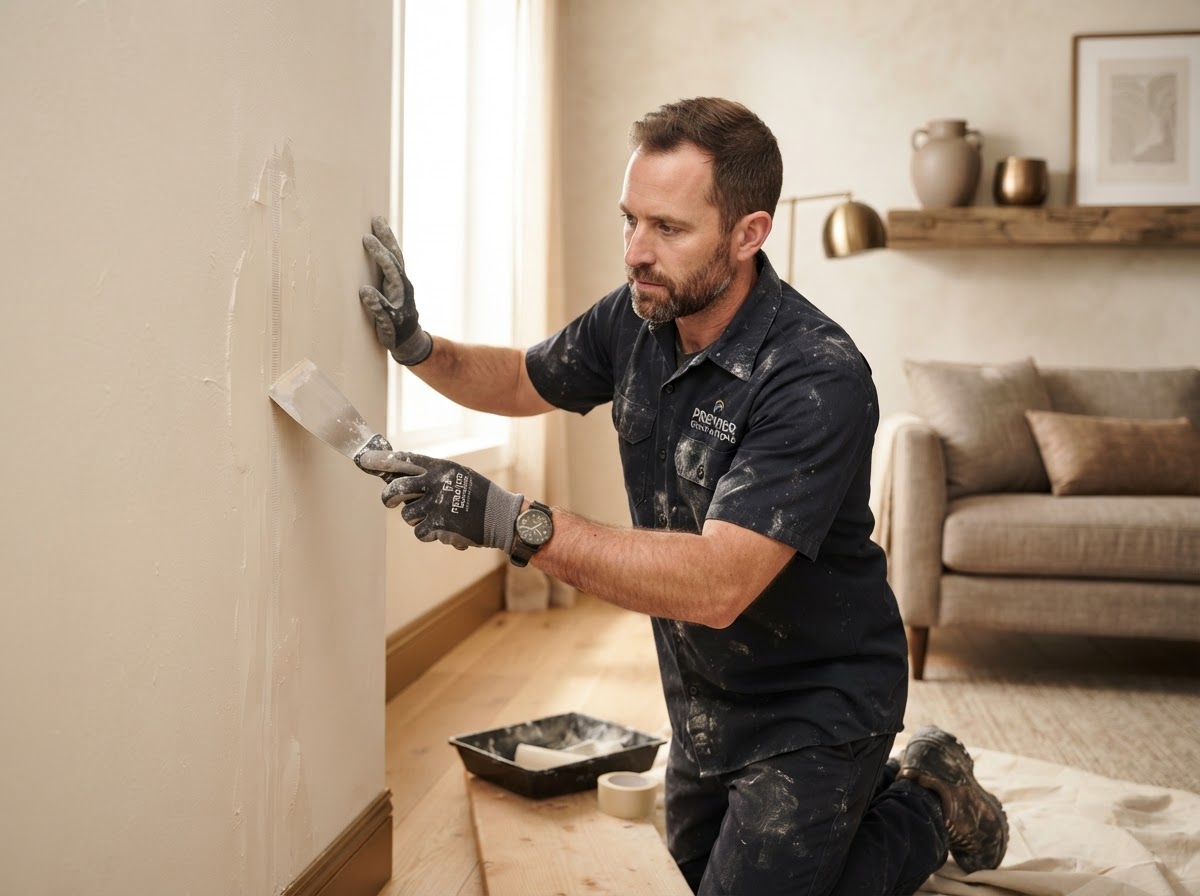
Drywall is the most repaired surface in a home, and most of the repairs are predictable. Here's a guide to the common drywall problems homeowners see, what each one usually means, and when it's worth fixing.
Nail pops are the most common. You'll see a small bump or crack where a fastener has pushed out — often as a house settles or with humidity changes. They're cosmetic in isolation but signal movement. Fixing them means resetting the fastener, patching, and texture-matching. Ignore a few; fix them when they cluster in one wall.
Settlement cracks show up above doors and windows and at wall corners. Thin, hairline cracks are normal as a house ages and are easy to patch. Cracks that widen, recur after patching, or come with sticking doors can point to ongoing movement and are worth assessing before just patching over.
Doorknob dents and holes are the everyday damage — a swung door, a moved piece of furniture. Small dents patch with a dab of compound; holes need a backer, a patch, and a texture match. These are quick handyman repairs that are obvious but easy to defer.
Water stains are the ones to take seriously. A brownish ring on a ceiling or wall means moisture got in at some point. The repair isn't just cosmetic — the source has to be found and fixed first, then the stained section patched or replaced. Painting over a water stain hides nothing and lets an active leak keep damaging the wall behind it.
Corner bead damage happens on outside corners — bumped by furniture or vacuumed into over the years. The metal or vinyl corner bead dents or separates, the corner cracks, and it looks shabby. Repair means straightening or replacing the bead and re-finishing the corner.
Texture mismatch is the finish problem. Patched drywall that doesn't match the surrounding texture — smooth where the wall is orange-peel, or vice versa — stands out more than the original damage did. A good repair matches the existing texture so the patch disappears.
When to repair drywall: for cosmetic damage, when it bothers you or before you're showing the home. For water stains, as soon as you see them — after fixing the source. For cracks that recur or widen, get an assessment first, because patching over ongoing movement won't hold. For most homeowners, drywall repair is ideal handyman work: quick, contained, and best done in a batch with other small repairs so the whole home looks cared for at once.
Related services
Need a hand around the house?
Request handyman service from Garbo Handyman Services in Tulsa, Oklahoma.